

I Read the Entire 11-Page Purchase Agreement So You Don’t Have To
Spoiler: it’s not thrilling. There are no plot twists. But somewhere in those 11 pages of bold fonts, legal clauses, and blank fill-ins is the difference between a smooth transaction and a lawsuit. So let’s break it...
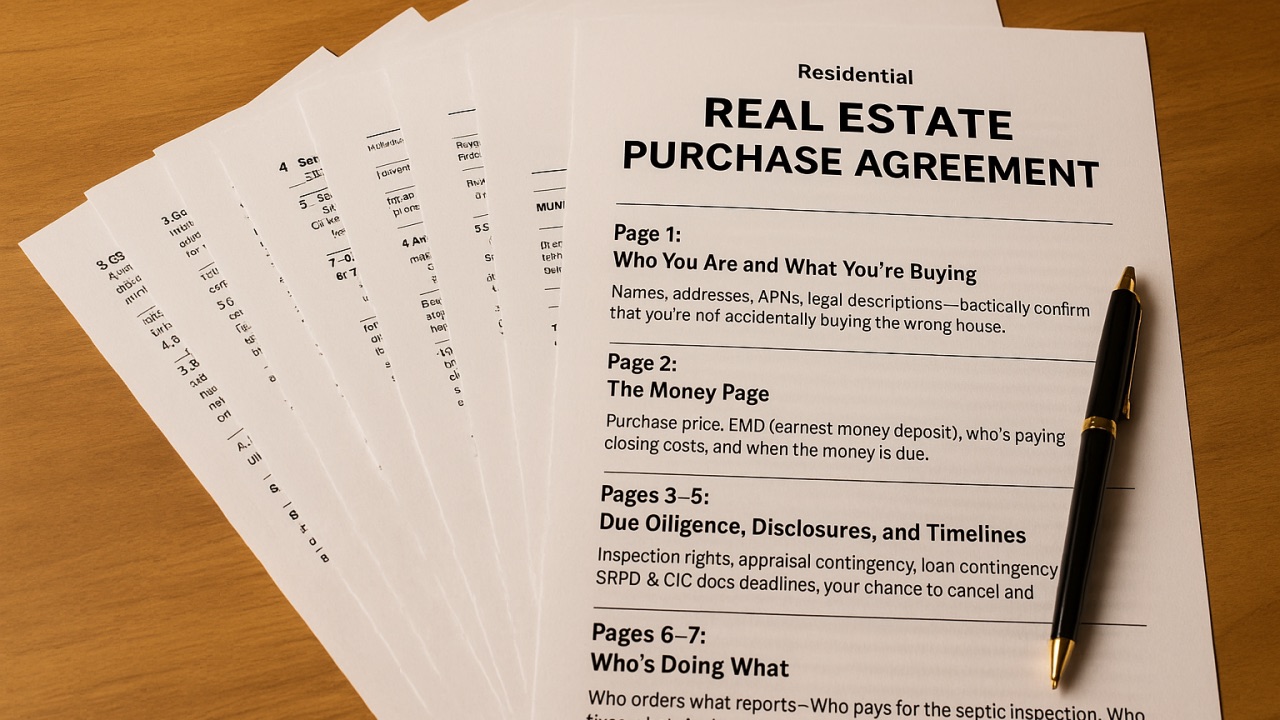
Spoiler: it’s not thrilling. There are no plot twists. But somewhere in those 11 pages of bold fonts, legal clauses, and blank fill-ins is the difference between a smooth transaction and a lawsuit.
So let’s break it down without the legalese or sugar-coating.
🖊 Page 1: Who You Are and What You’re Buying
Names, addresses, APNs, legal descriptions: basically confirming that you’re not accidentally buying the wrong house. (Yes, that’s happened.)
💰 Page 2: The Money Page
Purchase price, EMD (earnest money deposit), who’s paying closing costs, and when the money is due. If you're not reading this page, I guarantee your escrow officer is.
🔍 Pages 3 to 5: Due Diligence, Disclosures, and Timelines
These are your "read-the-fine-print-or-regret-it-later" pages. Highlights:
- Inspection rights
- Appraisal contingency
- Loan contingency
- SRPD & CIC docs deadlines
- Your chance to cancel and still get your money back
Ignore these and you might miss the one date that lets you walk away without losing your EMD.
🧾 Pages 6 and 7: Who’s Doing What
Who orders what reports. Who pays for the septic inspection. Who fixes what. And yes, who removes the bees from the attic.
📦 Page 8: Inclusions & Exclusions
What stays with the house (TV mounts? Curtains? Wine fridge?). This page saves more post-close fights than you think.
🏡 Page 9: Possession
Who’s moving in, and when. If you’re doing a leaseback, seller post-possession, or anything remotely non-standard, this page is gospel.
⚖ Page 10: The Fine Print
Arbitration, mediation, and your signature agreeing you’ve read the entire thing (even though we both know you didn’t). But I did. You’re welcome.
📄 Page 11: Signatures & Deadlines
Where everyone signs, initials, and pretends to understand what they just agreed to. And where your deal becomes real.
TL;DR:
This contract is boring, but it’s also binding. So if you’re buying or selling, and your agent isn’t walking you through the highlights in plain English, fire them. Or call me.